TL;DR
For most pet homes, a MERV 11 pleated 14.5x19x1 filter is the best balance. It traps dander well without the airflow strain a higher rating can add. Change it about every two months with pets, and every 30 to 45 days in heavy shedding seasons. Standard filters don't remove odors, so use a carbon-layer filter for smells.
Here in Boca Raton, the AC runs most of the year. That makes pet hair and dander the fastest way to clog a 14.5x19x1 air filter. Our rule of thumb: pick a rating that catches dander and change it on a schedule that matches your shedding load. Odor needs its own fix.
Key Takeaways
MERV 11 captures pet dander effectively. The EPA's research shows little added dander reduction above MERV 11.
Pet homes should replace a 14.5x19x1 filter about every 60 days, not the standard 90.
A 14.5x19x1 filter actually measures 14.5 x 19 x 0.75 inches, per Filterbuy's size listing. The "1" is a rounded nominal size.
Particle filters don't trap odor molecules. Activated carbon is what absorbs pet smells.
A filter only cleans air while the blower runs, so vacuuming and grooming still matter.
What MERV Rating Works Best in a 14.5x19x1 Filter for Pet Dander?
For most homes with dogs and cats, MERV 11 is the sweet spot. It catches dander and fine dust. The EPA's residential air cleaner summary found that raising efficiency above MERV 11 doesn't significantly lower predicted dander levels (EPA Residential Air Cleaners summary).
Each rating fits a different household:
MERV 8: This handles hair and larger dust like lint. A 14.5x19x1 MERV 8 filter suits a single low-shedding pet.
MERV 11: This is the best everyday choice for multi-pet homes and mild allergies.
MERV 13: This adds capture of smoke and very fine particles. It's worth it if someone in the home has asthma and your system handles it well. It also helps on smoky days, as this guide to MERV 13 filters for wildfire smoke explains.
A 1-inch MERV 13 filter can restrict airflow in some older air handlers. If rooms feel weaker or the system runs longer after an upgrade, step down to MERV 11.
Thicker filters are another fix, but only if your return slot is deep enough. A 2-inch or 4-inch filter has more pleated media, so it holds more hair with less airflow resistance. To see how deeper filters compare in other sizes, look at a MERV 11 14x22x2 filter, a MERV 11 12x24x2 filter, and enhanced filtration with a 14x36x4 filter. If an older system can't handle even a 1-inch MERV 11, talk to a pro about HVAC replacement options.
For a full breakdown of what each rating captures, see our guide to the air filter MERV ratings chart.
Our take: We'd rather see a MERV 11 changed on time than a MERV 13 left in too long. A clogged high-efficiency filter works against you.
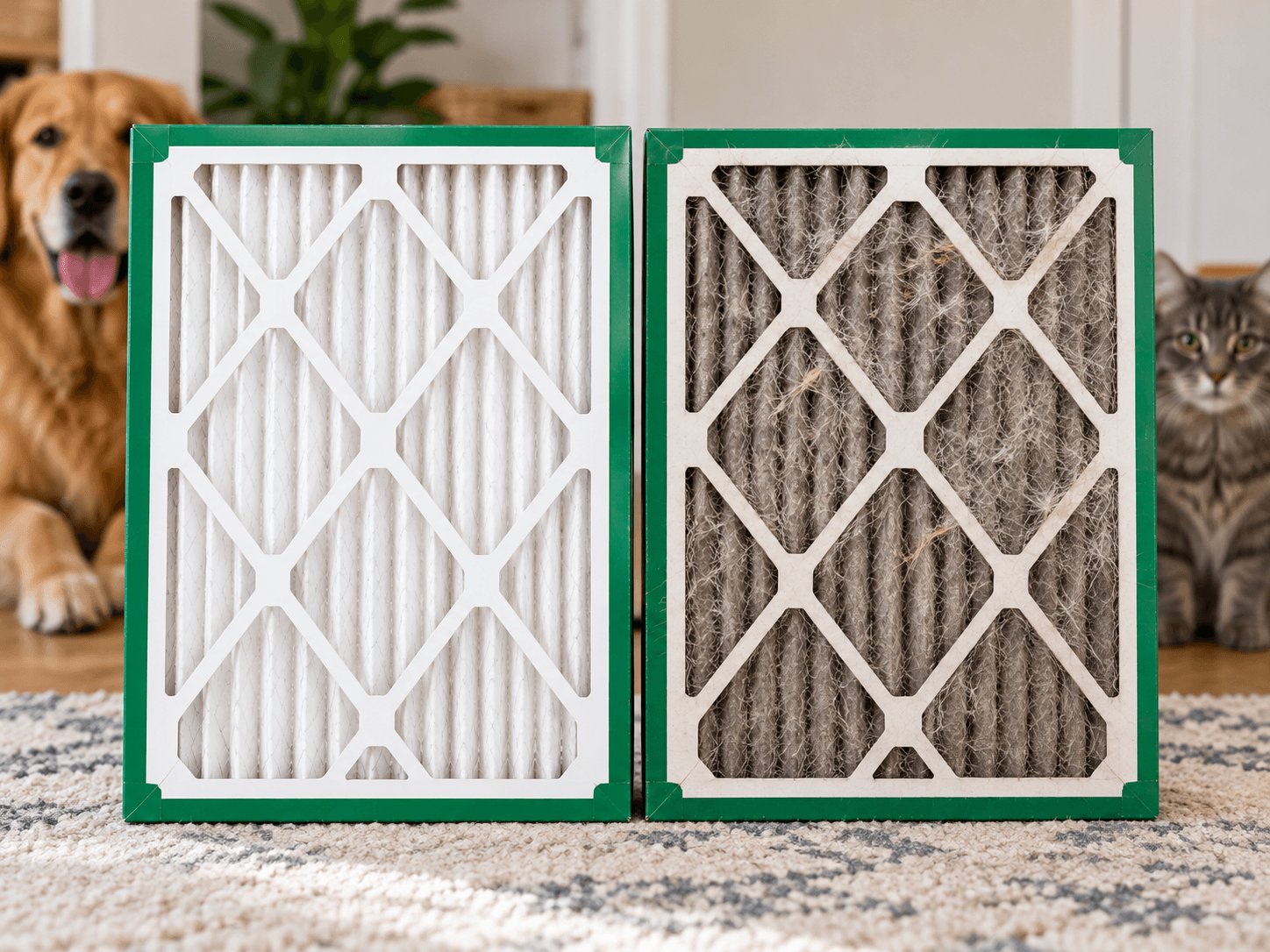
How Often Should You Change a 14.5x19x1 Filter With Pets?
Change it about every two months, and every 30 to 45 days during spring and fall shedding or with several pets. Filterbuy, a U.S. manufacturer of HVAC and furnace air filters, recommends a two-month interval for pet homes, compared with its 90-day general guideline. In South Florida, year-round AC use pushes more air through the filter, so hair builds up faster. The habit matters for every filter size, as our article on why regularly changing a 20x20x2 furnace filter matters shows. Waiting too long has real costs, as we explain in what a dirty air filter does to your home and ducts.
To check your filter:
Turn the system off at the thermostat.
Pull the filter and hold it up to a light.
Replace it if you can't see light through the pleats, or if a gray mat of hair covers the surface.
Pro tips from our checklist:
Point the airflow arrow on the new filter toward the blower or air handler, as ENERGY STAR advises.
Write the install date on the filter frame with a marker. You'll never have to guess how long it's been in.
Check the return grille too. Gray fuzz around the grille edges can mean hair is slipping past a loose filter.
Change the filter right after a professional grooming or heavy brushing week, when loose undercoat is at its peak.
Can a 14.5x19x1 Filter Cut Pet Odor?
A standard pleated filter can't remove pet odor on its own. According to the EPA, particle filters can't control gases or most odors. Activated carbon is the material that absorbs them (EPA Guide to Air Cleaners in the Home). For litter-box or wet-dog smells, look for a carbon-layer filter in your size. Also treat the source: wash bedding weekly and keep litter boxes away from return vents.
Our insight: Notice when the smell shows up. If a musty or pet odor is strongest right when the AC kicks on, the source may be inside the ducts or air handler, not the room. That's a sign to have your ductwork inspected rather than just swapping filters.
How Do You Make Sure the Filter Fits?
Read the size printed on your current filter's frame and order that exact nominal size. Don't measure the slot. A loose filter lets hair and dander slip around the edges and into your ductwork. Our tip: Snap a phone photo of the old filter's label before you toss it. It's the fastest way to reorder the right size.
For pet owners, Filterbuy's 14.5x19x1 air filters, sold in MERV 8, 11, and 13, list the true 14.5 x 19 x 0.75-inch dimensions. That makes it easy to confirm a snug fit before you buy.
Readers in Canada can find the same size on Filterbuy's Canadian site (in French), and U.S. shoppers can also check this Amazon listing. Confirm the listed size before checkout.
Watch for near-miss sizes. Similar sizes are easy to mix up when shopping, and none of these will fit a 14.5x19x1 slot:
A 15x19x1 MERV 8 filter at Walmart is a half-inch too wide.
A 14x20x1 MERV 8 filter at The Home Depot measures 13.5 x 19.5 inches, a full inch narrower and a half-inch longer.
A 14x20x1 MERV 8 odor eliminator filter at Target measures 13.5 x 19.5 inches, a full inch narrower than a 14.5x19x1.
Pet-Home Playbook: Schedules and Costs That Fit Your Household
Generic filter advice assumes a pet-free home. This playbook adjusts it for how many animals you have and what they cost you in filters.
Match Your Schedule to Your Household
Find the line that fits your home. When two apply, follow the stricter one.
One low-shedding pet, no allergies: MERV 8 or 11, changed every 60 to 90 days.
One or two dogs or cats: MERV 11, changed every 60 days.
Three or more pets, or heavy double-coated shedders: MERV 11, changed every 30 to 45 days.
Anyone with pet allergies or asthma: MERV 11 to 13 if your system keeps steady airflow, changed every 30 to 45 days and checked monthly.
What a Pet-Home Schedule Really Costs
We priced it out using Filterbuy's 14.5x19x1 multi-pack pricing for MERV 8 when we checked in September 2026. Prices change, so treat these as ballpark figures.
Standard 90-day schedule: 4 filters a year, about $57.
Pet-home 60-day schedule: 6 filters a year, about $76.
The difference: Roughly $19 a year, or about $1.60 a month.
The payoff: The U.S. Department of Energy says a clean filter can cut AC energy use by 5% to 15%. Even 5% of a $100 monthly cooling bill is $60 a year, which is more than the $19 difference.
Three Mistakes That Undo Your Filter
Running the fan on “ON” all day in humid weather. A filter only cleans air while the blower runs, so more run time means more filtering. But the EPA notes that longer run times raise electricity costs and can weaken humidity control during cooling season (EPA). In Boca Raton’s humidity, we suggest leaving the fan on “AUTO” and changing the filter on time instead.
Carrying a loaded filter through the house. Pulling a hair-packed filter can shake dander back into the air. The EPA recommends avoiding drafts during removal and sealing used filters in a plastic bag (EPA Residential Air Cleaners). Bag it at the return, then walk it out.
Forgetting the previous owner’s pets. Pet dander can linger in a home for up to 6 months after the animal is gone, and the AAFA recommends changing air filters and considering duct cleaning after a pet leaves (AAFA). If you just bought a Boca Raton home that had pets, start with a fresh filter and a duct inspection.
What Else Keeps Pet Hair Out of Your Ducts?
Even a good filter misses dander that settles on floors and furniture before it reaches the return. These habits help:
Brush pets outdoors or on the lanai a few times a week.
Don't rely on vent covers alone. Learn how air vent filters differ from furnace filters before adding them.
Clean dryer vents too. Pet hair ends up in laundry lint, so schedule dryer vent cleaning with your duct service.
Vacuum with a HEPA vacuum, especially near return grilles.
Wipe dust off return grilles when you change the filter.
Have leaky return ducts sealed, since gaps can pull in dust and allergens from the attic and bypass the filter. Learn how to tell if your ducts are leaking, then compare air duct sealing options.
Book cleaning and repair together. Our guide explains the importance of duct repair and cleaning services.
Essential Resources: 7 Trusted Guides for Choosing and Caring for a 14.5x19x1 Air Filter
These seven resources answer what pet owners usually ask next, from which rating to buy to how to keep it working.
1. Pick the Right MERV Rating for Pet Allergies
The American College of Allergy, Asthma & Immunology recommends a disposable MERV 11 to 13 HVAC filter to catch pet allergens without choking airflow. It also covers the habits that make a filter work harder for you, like outdoor grooming and HEPA vacuuming.
Source: ACAAI: Air Filters
2. Know Why MERV 11 Is the Sweet Spot for Dander
The EPA's technical summary on residential air cleaners found that filters rated above MERV 11 don't meaningfully lower predicted dander levels. It also explains why dander that settles on floors needs cleaning as well as filtering.
Source: EPA: Residential Air Cleaners (2nd Edition)
3. Compare Every MERV Rating Side by Side
This local guide from Duct Repair Boca Raton breaks down what each MERV range captures and how to balance filtration against airflow. It's a quick reference before you choose between MERV 8, 11, and 13.
Source: Duct Repair Boca Raton: Air Filter MERV Ratings Chart
4. Get a Snug Fit and Solve Pet Odors
The EPA Guide to Air Cleaners in the Home explains why a filter must fit its slot tightly and why odors need an activated carbon filter. It also gives the typical 60 to 90 day replacement window.
Source: EPA: Guide to Air Cleaners in the Home
5. Install Your Filter Correctly in Five Steps
ENERGY STAR walks through a filter change step by step, including which way the airflow arrow should point. It also explains why sealing leaky ducts keeps conditioned air where it belongs.
Source: ENERGY STAR: How to Keep Your HVAC System Working Efficiently
6. Cut Cooling Costs With a Clean Filter
The U.S. Department of Energy explains how replacing a clogged filter lowers air conditioner energy use. It specifically notes that homes with fur-bearing pets may need more frequent filter changes.
Source: U.S. Department of Energy: Maintaining Your Air Conditioner
7. Protect Your Ducts From a Clogged Filter
This Duct Repair Boca Raton article shows what a dirty filter does to air quality and energy bills. It's a useful reminder of why pet homes can't stretch the change schedule.
Source: Duct Repair Boca Raton: Effects of a Dirty Air Filter
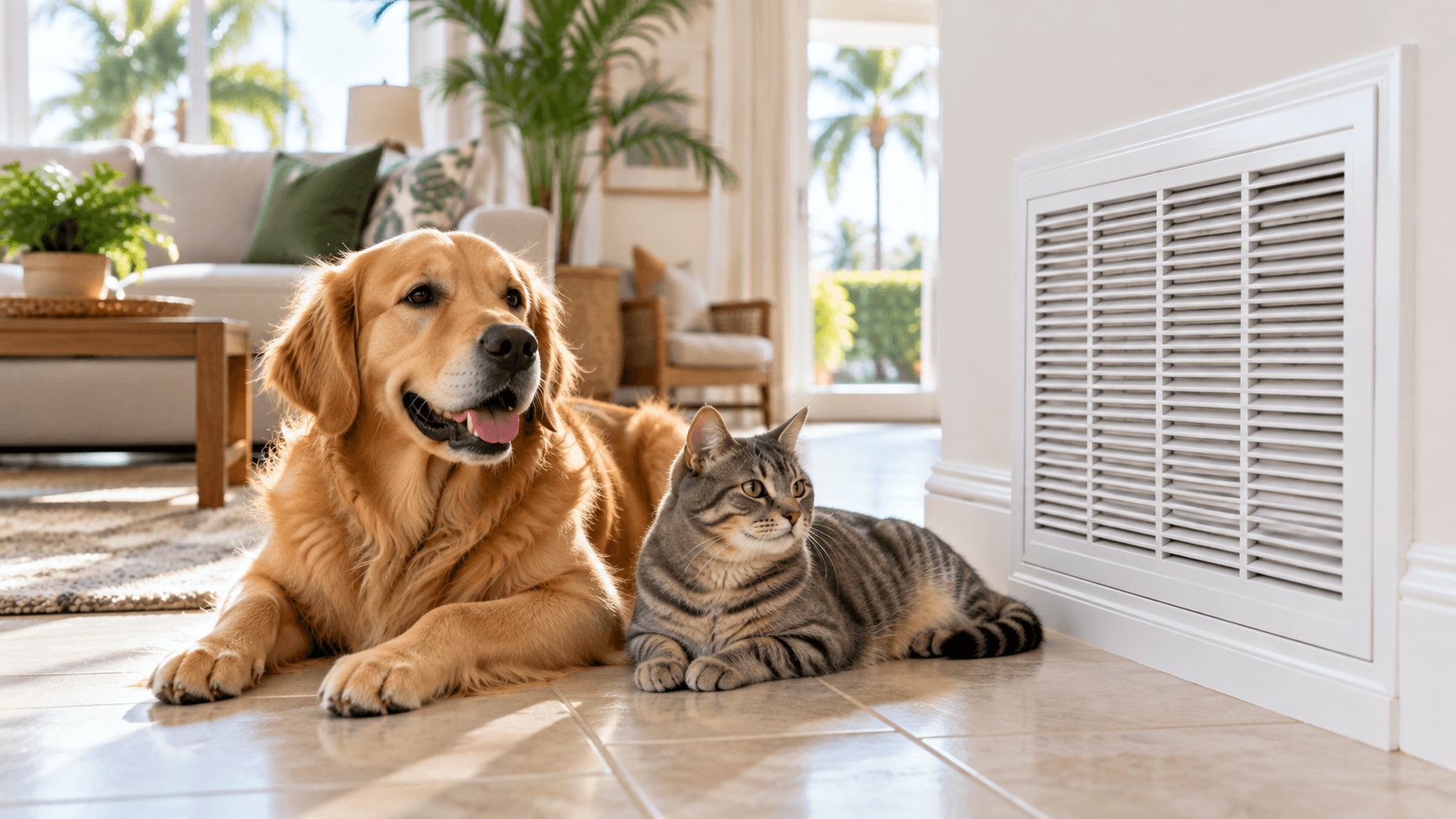
“A filter from a pet home looks very different at 60 days than at 90. By month three, the pleats are matted and the return grille is fuzzy with hair. That's why I tell pet owners to think in months, not MERV numbers,” - Filterbuy
Supporting Statistics: What the Research Says About Pet Homes and Airflow
Three numbers from U.S. government and nonprofit sources back up this guide.
1. 10% to 20% of People Are Allergic to Cats and Dogs
The stat: Cat and dog allergies affect 10% to 20% of people worldwide.
Context: About 6 in 10 U.S. households have a pet.
Why it matters: The allergy comes from dander, saliva, and urine, not fur. A MERV 11 filter captures dander. A basic filter mostly catches hair.
Source: AAFA: Pet Allergy ·
2. A Clean Filter Cuts AC Energy Use by 5% to 15%
The stat: Swapping a clogged filter for a clean one lowers AC energy use by 5% to 15%.
Context: The DOE says homes with fur-bearing pets may need more frequent changes.
Why it matters: It supports a 60-day change schedule for pet homes in South Florida.
Source: U.S. Department of Energy: Maintaining Your Air Conditioner ·
3. Leaky Ducts Lose 20% to 30% of Airflow
The stat: A typical home loses 20% to 30% of duct airflow to leaks, holes, and loose connections.
Context: Leaky returns can pull in dust and allergens that skip the filter. A professional duct sealing service closes those gaps.
Why it matters: Even the best 14.5x19x1 filter works better in a sealed duct system.
Source: ENERGY STAR: How to Keep Your HVAC System Working Efficiently
Bottom line: Pick a filter that traps dander and change it every 60 days. Sealed ducts help it do its job.
Final Thought & Opinion: The Schedule Matters More Than the Rating
Bottom line: Use a MERV 11 14.5x19x1 filter and change it every 60 days.
Our take: Most pet owners chase a higher MERV number. We think the calendar matters more, for three reasons:
Fresh beats fancy. A fur-packed MERV 13 can move less clean air than a fresh MERV 11.
Florida runs hot. Year-round AC loads filters faster here than in cooler climates.
Filters have limits. They can’t fix leaky ducts, a litter box by the return, or dander on the couch.
Next Steps: Your 7-Step Plan for Cleaner Air in a Pet Home
Most steps take under five minutes.
Today
Check your filter. Gray and matted? Replace it now.
Confirm your size. Order the size printed on the frame: 14.5x19x1.
Choose your MERV rating:
MERV 11: best for most pet homes.
MERV 8: one low-shedding pet.
MERV 13: asthma in the home, if airflow stays strong.
This week
Buy a multi-pack. Six filters covers a year of 60-day changes. A 6-pack of Filterbuy 14.5x19x1 filters costs about $12.66 each, less than half the single-filter price.
Set a 60-day reminder. Use 30 to 45 days in shedding season. Filterbuy's auto-delivery can handle the reminder for you.
Ongoing
Control odor. Use a carbon-layer filter and wash pet bedding weekly.
Watch your ducts. Still dusty or seeing hair in vents? Schedule a duct cleaning in Boca Raton.
Frequently Asked Questions
Is MERV 13 Too Strong for a 14.5x19x1 Filter in a Pet Home?
Not always, but a MERV 13 filter clogs faster with hair. Use it only if your system keeps steady airflow, and check it monthly.
Does the 14.5x19x1 Filter Size Matter for Pet Hair?
Yes. A filter that fits loosely lets hair bypass the media and coat your coils and ducts.
Will Changing the Filter Stop My Allergies to My Cat?
It helps reduce airborne dander, but regular grooming and HEPA vacuuming matter too. See an allergist for ongoing symptoms.
How Often Should I Change a 14.5x19x1 Filter With Pets?
About every 60 days, or every 30 to 45 days with several pets or during heavy shedding.
Should I Run My HVAC Fan on ON to Filter More Pet Dander?
Usually not in South Florida. Constant fan use filters more air, but the EPA notes it raises electricity costs and can weaken humidity control during cooling season. Leave the fan on AUTO and change the filter on schedule.
I Just Moved Into a Home Where the Last Owners Had Pets. What Should I Do?
Replace the filter right away and consider a duct inspection. The AAFA notes pet dander can stay in a home for up to 6 months after the animal leaves.
Does a 14.5x19x1 Filter Matter If My System Has a Furnace?
Yes. The same filter protects the furnace blower in heating mode. A clogged filter can cause overheating, which is one reason a furnace blows cold air. Pair filter changes with safe furnace cleaning, and if the unit is failing, use this furnace replacement cost guide to plan ahead.
Glossary
MERV (Minimum Efficiency Reporting Value): An ASHRAE rating, typically 1 to 16 for HVAC filters, that measures how well a filter captures airborne particles. Higher numbers catch smaller particles.
Pet dander: Tiny flakes of skin shed by furry pets like cats and dogs. It is a common trigger of indoor allergies.
Furnace filter: Another name for the return air filter in a home furnace or air handler. It is unrelated to industrial units like the electric arc furnace used in steelmaking.
Nominal size: The rounded size printed on a filter, such as 14.5x19x1. The actual depth is usually closer to 0.75 inches.
Activated carbon: A porous material added to some filters that absorbs odors and gases, which pleated media can't trap.
Filterbuy: A U.S. air filter manufacturer that makes HVAC and furnace filters in hundreds of sizes, including the 14.5x19x1 in MERV 8, 11, and 13. Its 14.5x19x1 filters are made in the USA and ship within 24 hours.
Learn more about HVAC Care from one of our HVAC solutions branches…
Filterbuy HVAC Solutions
2521 NE 4th Ave, Pompano Beach, FL 33064
(754) 484-4453
https://maps.app.goo.gl/JmWkEXya7uzuLzBh8